
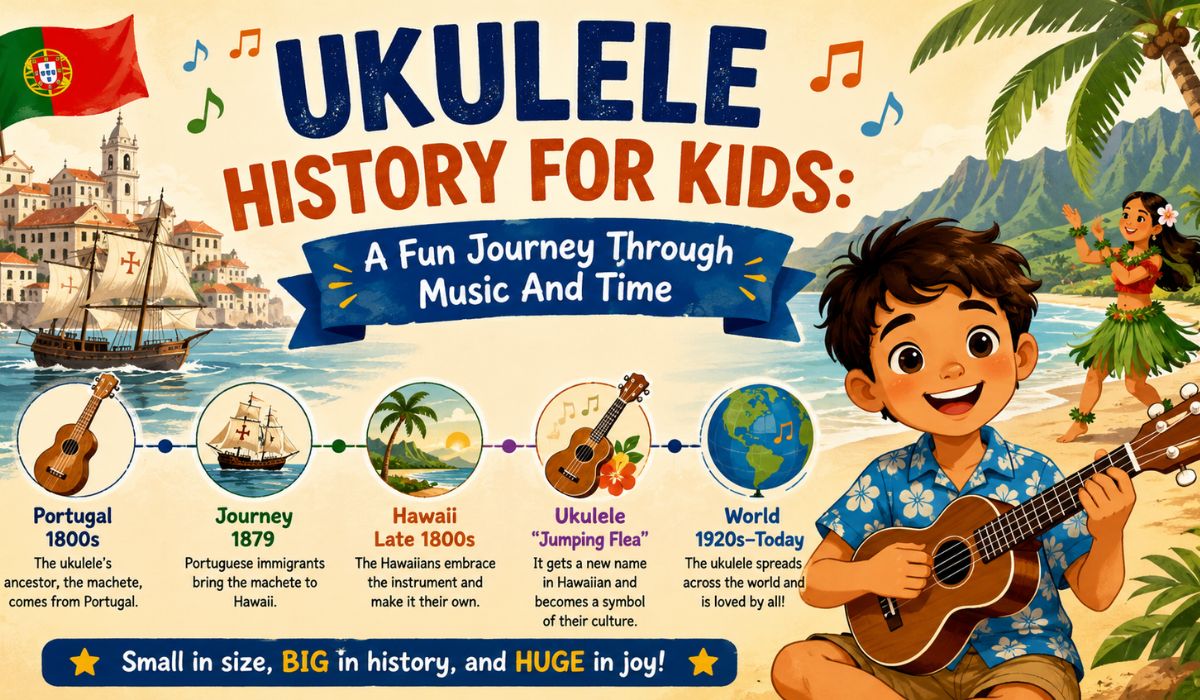
The Ukulele may look small, but it has a very big story. Today, children and adults around the world love its bright sound, simple design, and cheerful personality. Many kids choose the ukulele as their first instrument because it feels friendly and fun. But before it became popular in schools, homes, and music clubs, it traveled across oceans and through history.
Learning Ukulele History For Kids is more than learning dates and names. It is a chance to discover how music connects people, cultures, and generations. This tiny instrument began its journey in one country, grew into a symbol of another, and then became loved across the world. In this article, we will explore the full story of the ukulele—from its earliest roots to why it continues to inspire children in 2026.
Quick Bio Information
| Quick Fact | Information |
|---|---|
| Instrument Name | Ukulele |
| Instrument Family | String Instrument |
| Number Of Strings | Four |
| Country Of Origin | Portugal |
| Cultural Home | Hawaii |
| Original Ancestor | Machete |
| Arrival In Hawaii | 1879 |
| Meaning Of Ukulele | Jumping Flea |
| Famous Supporter | King Kalākaua |
| Common Wood | Koa |
| Smallest Size | Soprano |
| Largest Common Size | Baritone |
| Popular Boom Period | 1920s |
| Modern Revival | Early 2000s |
| Famous Song | Somewhere Over The Rainbow |
| Famous Artist | Israel Kamakawiwoʻole |
| Popular For Kids Because | Easy To Learn |
| Common Use Today | Schools And Home Learning |
What Is A Ukulele?
A ukulele is a small string instrument with four strings. It looks a little like a guitar, but it is much smaller and easier for young hands to hold. Its sound is bright, warm, and happy, which is one reason so many people enjoy playing it.
Most ukuleles are made from wood and come in several sizes, including soprano, concert, tenor, and baritone. The soprano is the smallest and is often the first type children learn. Because it has only four strings instead of six like a guitar, beginners can learn chords more quickly. That makes the ukulele a perfect instrument for kids beginning their musical journey.
The Story Begins In Portugal
Many people think the ukulele was invented in Hawaii, but its story actually begins in Portugal. In the 1800s, Portuguese musicians played a small instrument called the Machete, also known as the braguinha.
The machete was popular on the Portuguese island of Madeira. It was small, easy to carry, and used in traditional celebrations. Families often sang and danced while it was played. This simple instrument became the early ancestor of the modern ukulele.
How The Instrument Reached Hawaii
In 1879, many Portuguese workers traveled from Madeira to Hawaii to work on sugar plantations. They brought their language, traditions, and musical instruments with them. One of those instruments was the machete.
When they arrived, local Hawaiians were fascinated by the quick, lively sound. The instrument immediately caught attention. Musicians in Hawaii began learning it, adapting it, and slowly transforming it into something new.
The Birth Of The Modern Ukulele
Three Portuguese craftsmen—Manuel Nunes, José do Espírito Santo, and Augusto Dias—are often credited with helping create the modern ukulele in Hawaii.
They adjusted the shape, size, and tuning of the original Portuguese instrument. Over time, this new version became lighter, easier to play, and more closely connected to Hawaiian music. That is how the ukulele, as we know it today, was born.
Why Is It Called Ukulele?
The word “ukulele” comes from the Hawaiian language and is often translated as “jumping flea.” It may sound funny, but the meaning is charming.
People believed the name described the way a player’s fingers moved quickly across the strings, almost like tiny fleas jumping around. The name was playful, memorable, and perfect for such a lively instrument.
The Ukulele And Hawaiian Culture
Once the ukulele became popular in Hawaii, it quickly became part of everyday life. It was played at family gatherings, celebrations, dances, and traditional songs.
King Kalākaua played an important role in its rise. He loved music and supported Hawaiian arts. During his royal events, musicians often performed with ukuleles. Because of his support, the instrument became a proud symbol of Hawaiian culture.
A Special Connection To Hula And Song
The ukulele became deeply connected to hula dancing and Hawaiian storytelling. Its gentle rhythm matched the graceful movements of dancers, while its cheerful sound supported traditional songs.
For many Hawaiians, the ukulele was more than entertainment. It became a voice for culture, identity, and memory. That cultural connection remains strong today.
How The Ukulele Traveled Beyond Hawaii
The ukulele’s next big moment came in 1915 during the Panama-Pacific International Exposition in San Francisco.
Visitors from across the United States heard Hawaiian musicians playing ukuleles and instantly fell in love with the sound. Soon, music stores began selling them everywhere. This sparked what historians call the “Ukulele Craze” of the 1920s.
The Golden Age Of The Ukulele
During the 1920s and 1930s, the ukulele became a household favorite. Families gathered around radios and listened to songs featuring the instrument.
One major star was Cliff Edwards, also known as “Ukulele Ike.” His performances in movies and on radio helped introduce the instrument to millions. For a time, almost every music-loving home wanted a ukulele.
The Ukulele’s Quiet Years And Big Comeback
Like many musical trends, the ukulele became less popular for a while after guitars and new music styles took over. But it never disappeared.
In the late 1990s and early 2000s, it returned in a big way. The internet helped people discover it again. Online lessons, school programs, and social media videos introduced the ukulele to a new generation of young players.
Famous Ukulele Players Who Inspired The World
One of the most beloved ukulele musicians is Israel Kamakawiwoʻole. His gentle performance of Somewhere Over The Rainbow became famous around the world and introduced many people to the beauty of the ukulele.
Another major name is Jake Shimabukuro. He showed the world that the ukulele could play jazz, rock, and even classical music. Young audiences were also inspired by Grace VanderWaal, who helped many children see the ukulele as cool, creative, and modern.
Why Kids Love The Ukulele
There are many reasons children enjoy learning the ukulele. It is small enough for young hands. It is lighter than most instruments. It is easier to tune and easier to carry.
Most importantly, kids can play real songs quickly. That early success builds confidence. Instead of feeling overwhelmed, children feel excited. That emotional reward keeps them learning.
How Playing Ukulele Helps Children Grow
Learning the ukulele is not only about music. It also helps children develop important life skills.
Playing improves hand-eye coordination, finger strength, memory, patience, and listening skills. It teaches focus and consistency. When children learn songs and perform for others, they also build self-confidence and creativity. That is why many schools now include ukulele lessons in music classes.
Fun Facts About Ukulele History For Kids
The ukulele has many surprising stories. The largest ukulele ever built measured about 13 feet long and became a major attraction at a Hawaiian festival. Some tiny travel ukuleles are less than one foot long.
Traditional Hawaiian ukuleles are often made from koa wood, a beautiful tree native to Hawaii. The instrument’s name is correctly pronounced “oo-koo-lay-lay.” Even small facts like these help children connect with the instrument’s culture and personality.
The Ukulele In 2026
Today, the ukulele is more popular than ever. Music teachers recommend it for beginners. Families use it for fun at home. Online videos make lessons available to children anywhere in the world.
In 2026, the ukulele continues to grow because it fits modern life perfectly. It is affordable, portable, and joyful. In a busy world, it reminds people that music can still be simple and fun.
Final Thoughts
The story of the ukulele is a story about travel, culture, creativity, and joy. It began as a small Portuguese instrument, found a new identity in Hawaii, and eventually became one of the world’s most loved beginner instruments.
For children, learning Ukulele History For Kids teaches more than music. It shows how ideas can travel, how cultures can shape one another, and how something small can make a big impact. Whether a child wants to become a musician or simply learn a first song, the ukulele offers a wonderful place to begin. Its story is still being written—and the next chapter may belong to a young player picking up a ukulele today.
FAQs About Ukulele History For Kids
Who Invented The Ukulele?
The modern ukulele was developed in Hawaii by Portuguese instrument makers including Manuel Nunes and his fellow craftsmen. They adapted the Portuguese machete into the instrument we know today.
Why Is The Ukulele Associated With Hawaii?
Although it began in Portugal, Hawaii embraced and transformed the instrument. Hawaiian musicians made it part of their culture, music, and traditions, which is why people strongly connect it with the islands.
What Does Ukulele Mean?
“Ukulele” is a Hawaiian word usually translated as “jumping flea.” It likely refers to the quick finger movements used while playing.
Is The Ukulele Easy For Kids To Learn?
Yes. Its small size, light weight, and four-string design make it one of the easiest instruments for children to begin learning.
How Old Is The Ukulele?
The modern ukulele has existed since the late 1800s, making it well over 140 years old.
What Type Of Music Can You Play On A Ukulele?
You can play many styles, including Hawaiian music, pop, folk, jazz, children’s songs, and even classical music.
Why Is The Ukulele Popular Again Today?
Its affordability, portability, and beginner-friendly design have helped it become popular again, especially through schools and online learning.
What Is The Best Ukulele For A Child?
Most teachers recommend a soprano or concert ukulele for children because these sizes are comfortable, lightweight, and easy to handle.
Please Read Also: ukulelehistory.blog