
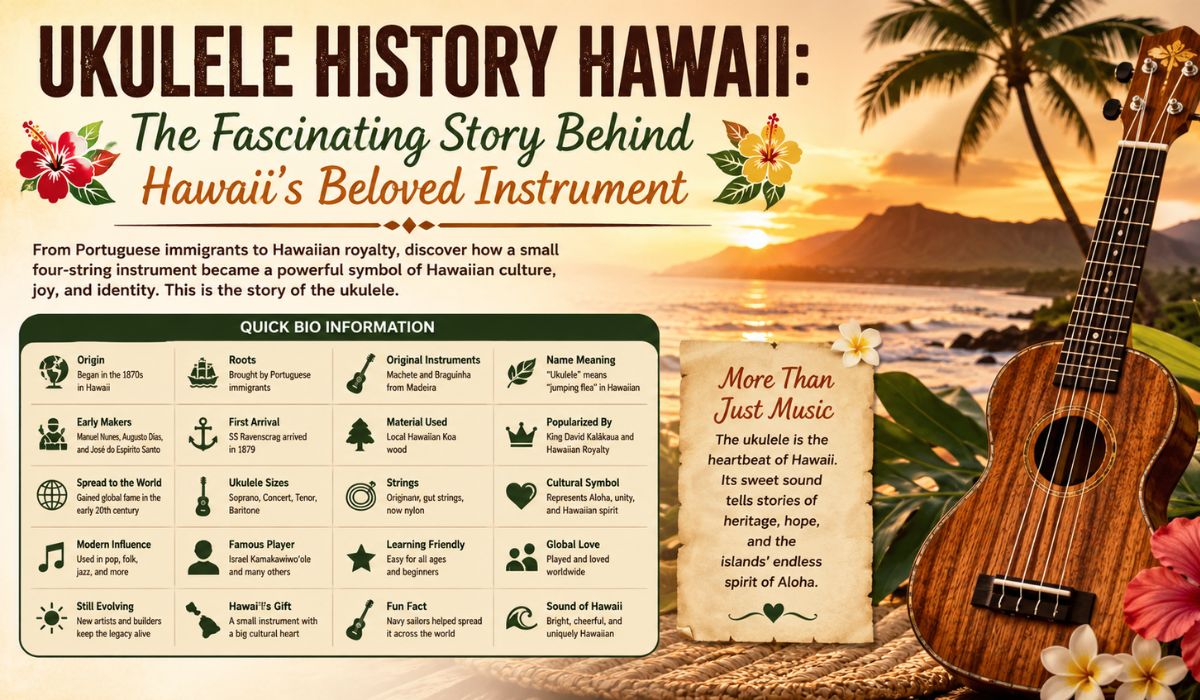
When most people think about Hawaii, they imagine beautiful beaches, warm sunshine, hula dancing, and the soft, joyful sound of a ukulele. That small four-string instrument has become one of the strongest symbols of Hawaiian culture. Its sound instantly creates images of island life and peaceful ocean breezes. But the real story behind Ukulele History Hawaii is much more fascinating than many people realize.
Although the ukulele is deeply connected to Hawaiian identity, its roots began far away from the Pacific Ocean. Its journey started across the Atlantic, traveled through immigration and cultural exchange, and eventually transformed into one of the most loved instruments in the world. Today, in 2026, the ukulele continues to inspire musicians, teachers, students, and music lovers everywhere. Understanding its story helps us appreciate not only the instrument itself, but also the people and cultures that shaped it.
Quick Bio Information
Official Name: Ukulele
Meaning: Jumping Flea
Primary Home: Hawaii
Original Roots: Portugal
Ancestor Instrument: Machête
Secondary Influence: Rajão
Arrival In Hawaii: 1879
Important Ship: SS Ravenscrag
Main Early Builders: Nunes, Dias, Santo
Traditional Wood: Koa
Standard Tuning: G-C-E-A
Royal Supporter: King David Kalākaua
Global Breakthrough: 1915
Common Sizes: Four
Musical Family: Guitar Family
Original Strings: Animal Gut
Modern Strings: Nylon
Modern Popularity: Global
Cultural Role: Hawaiian Identity
Status In 2026: Thriving Worldwide
Why The Ukulele Represents Hawaii
The ukulele is much more than a musical instrument in Hawaii. It is a symbol of tradition, joy, and cultural pride. For generations, Hawaiian families have used the ukulele in homes, schools, celebrations, and community gatherings. Its bright and welcoming sound naturally fits the warm spirit of the islands.
Over time, the ukulele became linked with Hawaiian hospitality and storytelling. Whether played at a beach gathering or a formal cultural event, the instrument creates a feeling of togetherness. This emotional connection is one reason the ukulele remains such a powerful symbol of Hawaii today.
What Is A Ukulele?
A ukulele is a small, lightweight, stringed instrument in the guitar family. Most ukuleles have four strings and produce a bright, cheerful tone. Its simple design makes it easier to learn than many other instruments, which helps explain its lasting popularity.
There are four common sizes: soprano, concert, tenor, and baritone. Each size creates a slightly different sound and playing experience. Beginners often start with soprano or concert models, while professionals may choose tenor or baritone for richer tone and more playing flexibility.
Did The Ukulele Begin In Hawaii?
Many people believe Hawaiians invented the ukulele entirely on their own. That idea is understandable because the instrument feels so naturally Hawaiian. However, the true story is more complex.
The ukulele was developed in Hawaii, but it was inspired by earlier Portuguese instruments. Hawaii gave the instrument its identity, name, sound, and cultural meaning. In that way, Hawaii transformed something imported into something uniquely its own.
The Portuguese Roots Of Ukulele History Hawaii
The earliest roots of the ukulele trace back to Madeira, a Portuguese island in the Atlantic Ocean. In the 1800s, Madeira was known for music, woodworking, and instrument craftsmanship.
One popular local instrument was the Machête, also called the Braguinha. It was a small four-string instrument with a shape similar to the modern ukulele. Musicians played it in homes, streets, and public celebrations. That instrument would later become the direct ancestor of the Hawaiian ukulele.
The Great Journey To Hawaii
During the late nineteenth century, Madeira experienced severe poverty, crop failure, and economic hardship. Many families searched for a better life elsewhere.
At the same time, Hawaii’s growing sugar plantations needed workers. Thousands of Portuguese immigrants accepted contracts to work there. In 1879, one important ship, the SS Ravenscrag, carried hundreds of Madeiran immigrants to Hawaii. That voyage would unexpectedly change musical history forever.
The Three Craftsmen Who Built The First Hawaiian Ukuleles
Among those immigrants were three talented woodworkers: Manuel Nunes, Augusto Dias, and Jose do Espirito Santo.
After completing plantation work, they moved to Honolulu and opened workshops. They began building familiar Portuguese-style instruments, but soon started adapting them using Hawaiian materials and local musical preferences. Their work laid the foundation for what we now call the ukulele.
How The First Hawaiian Ukulele Was Created
The earliest Hawaiian ukuleles were likely hybrids. Builders combined the compact body of the Portuguese Machête with tuning ideas from another Portuguese instrument called the Rajão.
This combination created something entirely new. The now-famous G-C-E-A tuning gave the instrument its bright sound and easy playability. Hawaii did not simply copy an existing instrument. It transformed one into something original.
Why Koa Wood Changed Everything
Koa wood became one of the most important parts of early Hawaiian ukulele design.
Koa grows naturally in Hawaii and has beautiful golden-brown grain. It is lightweight but strong, making it perfect for instrument building. More importantly, it creates a warm, rich sound that became part of the classic Hawaiian ukulele voice. Even today, premium ukuleles often use koa because of this heritage.
The Meaning Of The Word Ukulele
The word “Ukulele” comes from the Hawaiian language. It is most commonly translated as “Jumping Flea.”
Many believe the name refers to the fast movement of a player’s fingers across the strings, which can look like a flea jumping. Others suggest it may have been a playful nickname given to early Portuguese musicians. Whatever its exact origin, the name became inseparable from Hawaiian culture.
Hawaiian Royalty Helped Make It Famous
David Kalākaua played a major role in spreading the ukulele.
Known as the “Merrie Monarch,” King Kalākaua loved music, dance, and Hawaiian traditions. He encouraged musicians to perform at royal gatherings and celebrations. Queen Liliʻuokalani also supported Hawaiian music and composition. Their support gave the ukulele prestige and helped it spread across the islands.
The Ukulele Became A Symbol Of Hawaiian Culture
As the instrument grew in popularity, it became deeply woven into Hawaiian daily life. It appeared in hula performances, family gatherings, church music, and school lessons.
The ukulele became more than entertainment. It became a voice for Hawaiian identity. During times of cultural change and political struggle, it remained a reminder of heritage and resilience.
How The Ukulele Reached The World
The turning point came in 1915 at the Panama-Pacific International Exposition in San Francisco.
Hawaiian performers introduced mainland American audiences to the ukulele, and people immediately fell in love with its sound. By the 1920s, it was appearing in homes, films, and music shops across America. Soon after, it spread globally.
Famous Musicians Who Kept The Ukulele Alive
Many artists helped preserve and modernize the ukulele.
Israel Kamakawiwoʻole introduced millions to the emotional beauty of the instrument through his iconic medley of “Over The Rainbow.”
Artists like George Harrison openly loved the instrument, while modern performers such as Jason Mraz and Jake Shimabukuro brought it to younger audiences.
Their work proved that the ukulele could succeed far beyond traditional Hawaiian music.
The Modern Ukulele Revival
Today, the ukulele is more popular than ever. Social media, online lessons, and affordable beginner models have introduced millions of new players to the instrument.
Schools around the world now teach ukulele because it is approachable and fun. In Hawaii, local builders continue traditional craftsmanship while new artists experiment with modern sounds. This balance between tradition and innovation keeps the ukulele alive.
Why Ukulele History Hawaii Still Matters Today
Learning about Ukulele History Hawaii teaches an important lesson about cultural exchange. The instrument was born through migration, adaptation, and creativity. It reminds us that cultures grow stronger when they share ideas.
The ukulele also proves that small things can have enormous impact. What began as a modest handmade instrument became one of the world’s most joyful musical voices.
Conclusion
The story of Ukulele History Hawaii is not simply about a musical instrument. It is a story of migration, craftsmanship, culture, and identity. What began with Portuguese immigrants on a long ocean voyage became one of Hawaii’s greatest cultural gifts to the world.
Today, every time someone strums a ukulele, they connect to that history. They connect to Madeira’s craftsmen, Hawaii’s royal courts, generations of island families, and modern musicians keeping the tradition alive. That is what makes the ukulele so special. It is not just music. It is history you can hear.
FAQs About Ukulele History Hawaii
Where Did The Ukulele Originally Come From?
The ukulele’s earliest roots came from Portuguese instruments brought from Madeira to Hawaii in 1879. Hawaii later transformed it into its own unique instrument.
Why Is The Ukulele Associated With Hawaii?
The instrument became deeply connected to Hawaiian culture through music, hula, family traditions, and royal support, making it a symbol of the islands.
What Does Ukulele Mean?
Ukulele usually means “Jumping Flea” in Hawaiian, likely referring to fast finger movement while playing.
Who Built The First Hawaiian Ukuleles?
Manuel Nunes, Augusto Dias, and Jose Do Espirito Santo are considered the first major Hawaiian ukulele builders.
Why Is Koa Wood Important?
Koa is native to Hawaii and produces the warm sound and beautiful appearance associated with classic Hawaiian ukuleles.
When Did The Ukulele Become Popular Worldwide?
The major breakthrough happened in 1915 during the Panama-Pacific International Exposition in San Francisco.
Is The Ukulele Still Popular In 2026?
Yes. It remains one of the fastest-growing instruments worldwide thanks to schools, online learning, and global music culture.
Is The Ukulele Easy To Learn?
Yes. Its smaller size, fewer strings, and simple chords make it one of the easiest instruments for beginners.
Please Read Also: Ukulele History For Kids: A Fun Journey Through Music And Time