
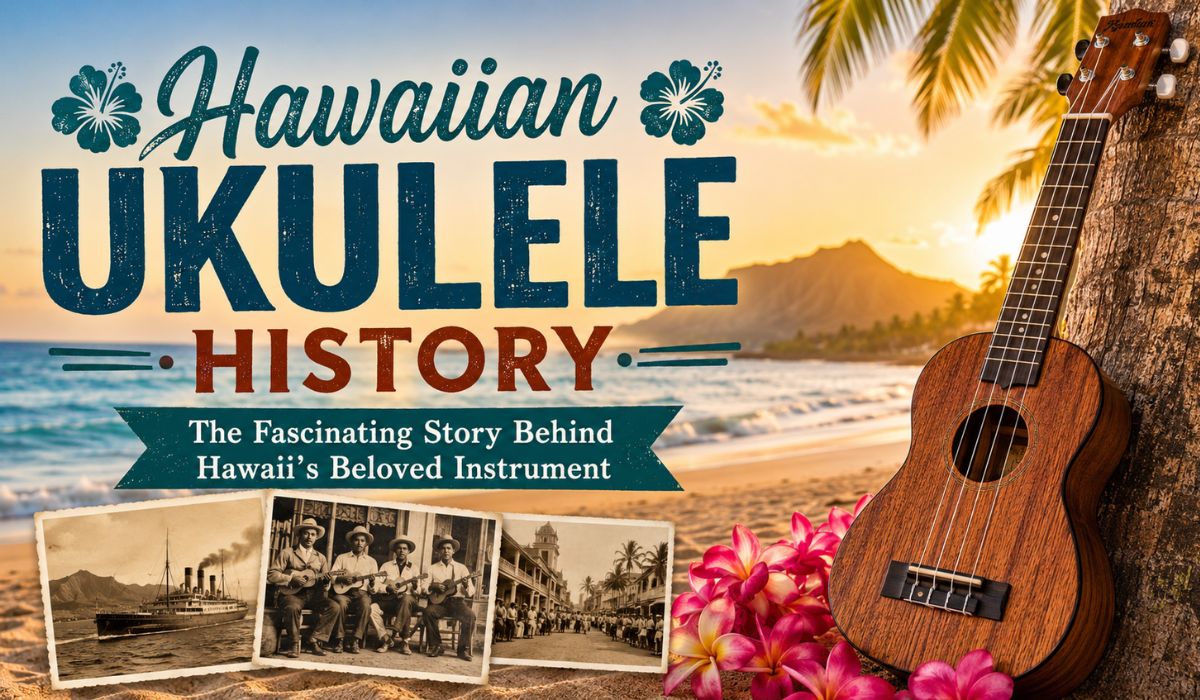
The ukulele is one of the most recognizable musical instruments in the world. Its cheerful sound instantly brings to mind warm beaches, ocean breezes, and the welcoming spirit of Hawaii. But the story of this small four-string instrument is much deeper than many people realize. Hawaiian Ukulele History is not simply the story of an instrument—it is the story of migration, cultural exchange, creativity, and resilience.
Today, the ukulele is closely tied to Hawaiian identity. It appears in traditional songs, modern pop music, family gatherings, festivals, and classrooms across the islands and far beyond. Yet its roots begin thousands of miles away in Europe before it transformed into a treasured symbol of Hawaiian culture. Understanding Hawaiian Ukulele History helps us appreciate how an imported instrument became the musical heart of Hawaii and a beloved instrument worldwide.
Table of Contents
ToggleQuick Bio Information
Origin
Madeira, Portugal
Arrival In Hawaii
1879
Original Instruments
Braguinha, Machête, Rajão
Meaning Of Ukulele
Jumping Flea
Primary Hawaiian Wood
Koa
Number Of Strings
Four
Traditional Tuning
G-C-E-A
Most Common Type
Soprano
Cultural Symbol
Aloha And Storytelling
Royal Supporter
King Kalākaua
Famous Hawaiian Song
Aloha ʻOe
Major American Breakthrough
1915 Exposition
Modern Icon
Israel Kamakawiwoʻole
Famous Contemporary Player
Jake Shimabukuro
Annual Celebration
Ukulele Festival Hawaii
Home Of The Instrument Today
Worldwide
What Is A Ukulele?
The ukulele is a small, guitar-like string instrument traditionally played with four strings. Its compact size makes it approachable for beginners, while its bright and warm tone makes it loved by musicians of all levels.
The most common types include soprano, concert, tenor, and baritone ukuleles. The soprano is the smallest and most traditional style, often associated with classic Hawaiian music. Over time, the ukulele has evolved into many forms, but its simple charm remains unchanged. In Hawaiian culture, the instrument represents joy, storytelling, and connection.
The True Origins Of Hawaiian Ukulele History
Many people assume the ukulele was invented in Hawaii, but that is only part of the story. Its earliest roots can be traced to Madeira, a Portuguese island in the Atlantic Ocean.
During the 1800s, Madeira was known for woodworking, shipbuilding, and folk music. Local musicians commonly played small string instruments called the braguinha and the machête. These instruments were compact, easy to carry, and produced a bright sound that would later inspire the ukulele. Another related instrument, the rajão, also influenced its design. These Portuguese instruments formed the musical foundation for what would later become the Hawaiian ukulele.
How Portuguese Immigration Changed Hawaiian Music
In the late nineteenth century, Madeira faced severe economic hardship. Crop failures, natural disasters, and poverty pushed many families to search for better opportunities abroad.
At the same time, Hawaii’s sugar plantations needed labor. Plantation owners recruited workers from Portugal, especially from Madeira and the Azores. Thousands of Portuguese immigrants traveled to Hawaii beginning in 1878 and 1879.
These immigrants brought more than their labor—they brought their language, traditions, recipes, and music. Hidden among their belongings were the small instruments that would soon reshape Hawaiian musical history.
The Famous Arrival In Hawaii
One of the most famous stories in Hawaiian Ukulele History centers on a Portuguese immigrant named João Fernandes.
According to Hawaiian tradition, after arriving in Honolulu following a long sea voyage, Fernandes was so happy to reach land that he immediately began playing his small instrument on the dock. Hawaiian onlookers were fascinated by how quickly his fingers moved across the strings.
That movement inspired the name “ukulele,” which roughly translates as “jumping flea” in Hawaiian. Whether every detail of this story is historically exact or partly legend, it remains one of the most beloved stories connected to the instrument.
The Birth Of The Hawaiian Ukulele
Once the Portuguese instruments arrived in Hawaii, local craftsmen and immigrant builders began adapting them. The instrument slowly changed in shape, size, and sound.
The Hawaiian version became slightly smaller and lighter than some Portuguese originals. Most importantly, builders started using native Hawaiian koa wood. Koa gave the instrument a rich tone and a beautiful golden appearance. This was the moment when the instrument stopped being simply Portuguese and became distinctly Hawaiian.
The ukulele was born not in a single moment, but through years of cultural blending and creative craftsmanship.
The Master Builders Who Shaped The Instrument
Three names are central to Hawaiian Ukulele History: Manuel Nunes, Augusto Dias, and José do Espírito Santo.
These Portuguese craftsmen first worked on sugar plantations but later opened woodworking shops in Honolulu. There they began building instruments professionally.
Their workshops helped standardize the ukulele’s design. Their methods influenced generations of Hawaiian luthiers, and their legacy still shapes instrument making today.
How Hawaiian Royalty Popularized The Ukulele
The ukulele might never have become a Hawaiian icon without the support of Hawaiian royalty.
King Kalākaua was a major supporter of Hawaiian music and dance. Known as “The Merrie Monarch,” he encouraged cultural revival during a period of intense outside influence.
He embraced the ukulele at royal gatherings and performances. His support elevated the instrument from a novelty to an important cultural symbol.
Other royal figures, including Queen Emma and Liliʻuokalani, also supported Hawaiian music. Their patronage helped secure the ukulele’s place in Hawaiian life.
The Ukulele And Hawaiian Hula
Hula has always been one of Hawaii’s most powerful storytelling traditions. Originally accompanied by chant and percussion, hula evolved during the nineteenth century.
The ukulele became an ideal partner for modern hula because of its gentle rhythm and flexible sound. It could support singers while guiding dancers through emotional performances.
This relationship between hula and ukulele strengthened the instrument’s connection to Hawaiian identity.
How The Ukulele Reached America
In 1915, the Panama-Pacific International Exposition introduced Hawaiian music to a wider American audience.
The Hawaiian Pavilion featured dancers, singers, and ukulele players. Audiences were captivated.
Suddenly, the ukulele became fashionable across the mainland United States. Music stores began selling inexpensive models, and instruction books appeared everywhere. By the 1920s, America had fallen in love with the ukulele.
Hollywood And Global Popularity
The twentieth century pushed the ukulele into popular culture.
Films featuring Hawaiian themes often used the instrument to create tropical atmosphere. Elvis Presley helped popularize Hawaiian imagery through movies like Blue Hawaii.
Later, musicians such as Israel Kamakawiwoʻole brought the ukulele to a new generation. His version of Somewhere Over The Rainbow introduced millions of listeners to the instrument’s emotional power.
Today, artists like Jake Shimabukuro continue pushing the instrument into new musical territory.
Why Koa Wood Matters
No discussion of Hawaiian Ukulele History is complete without understanding koa wood.
Koa is native to Hawaii and has been used for centuries in canoes, tools, and ceremonial objects. Using koa in ukulele construction connected the instrument directly to Hawaiian land and tradition.
Its sound is warm and balanced, and its grain is visually stunning. Premium Hawaiian ukuleles still use koa today, making it one of the most respected materials in instrument building.
Hawaiian Ukulele Festivals Today
Modern Hawaii celebrates the ukulele through annual festivals and educational programs.
Ukulele Festival Hawaii brings together players, teachers, and fans from around the world. These gatherings preserve tradition while inspiring new generations.
Schools across Hawaii also teach ukulele as part of music education, ensuring that the instrument remains part of everyday life.
Hawaiian Ukulele History Timeline
The earliest Portuguese instruments existed long before the nineteenth century. In 1879, Portuguese immigrants brought them to Hawaii. During the 1880s, local builders adapted them into the modern ukulele. By the 1890s, Hawaiian royalty had embraced the instrument. In 1915, America discovered it. During the twentieth century, film and popular music spread it globally. By 2026, the ukulele remains one of the world’s most loved instruments.
Why The Ukulele Still Matters Today
The ukulele remains popular because it is simple, joyful, and deeply human. It is easy for beginners, yet expressive enough for master musicians.
More importantly, it represents resilience. Hawaiian Ukulele History reminds us that culture can grow stronger through change. A Portuguese instrument became Hawaiian through love, creativity, and community.
That story still resonates today.
Conclusion
The story of the ukulele is much more than a musical history lesson. It is a story of migration, adaptation, and identity. Born from Portuguese roots and transformed in Hawaii, the ukulele became one of the strongest symbols of Hawaiian culture.
Its sound carries memories of family gatherings, hula performances, royal celebrations, and quiet evenings by the ocean. Whether played on a beach in Hawaii or in a home halfway around the world, the ukulele continues to share the spirit of aloha.
That is the enduring beauty of Hawaiian Ukulele History.
FAQs About Hawaiian Ukulele History
Was The Ukulele Invented In Hawaii?
Not exactly. The ukulele was inspired by Portuguese instruments brought to Hawaii by immigrants. It was redesigned and developed in Hawaii, which is why it is considered a Hawaiian instrument today.
What Does Ukulele Mean?
The Hawaiian word “ukulele” is commonly translated as “jumping flea,” referring to the fast movement of a player’s fingers across the strings.
Who Brought The Ukulele To Hawaii?
Portuguese immigrants from Madeira brought the original instruments to Hawaii in 1879 while traveling to work on sugar plantations.
Why Is The Ukulele Important In Hawaiian Culture?
It represents storytelling, family, aloha spirit, and cultural identity. It also played a major role in preserving Hawaiian music and hula.
What Wood Is Traditionally Used For Hawaiian Ukuleles?
Koa wood is the traditional and most respected Hawaiian wood used in premium ukulele making.
Who Made The Ukulele Famous Worldwide?
Many artists helped, but Israel Kamakawiwoʻole and Elvis Presley were especially influential in bringing the ukulele to global audiences.
Is The Ukulele Still Popular In 2026?
Yes. It remains highly popular worldwide thanks to online lessons, social media, music education, and growing interest in acoustic instruments.
Why Do Beginners Love The Ukulele?
It is small, affordable, easy to learn, and produces a beautiful sound quickly, making it one of the best beginner instruments available.
Recommended For You: Ukulele History Timeline: The Complete Story Of Its Musical Journey