
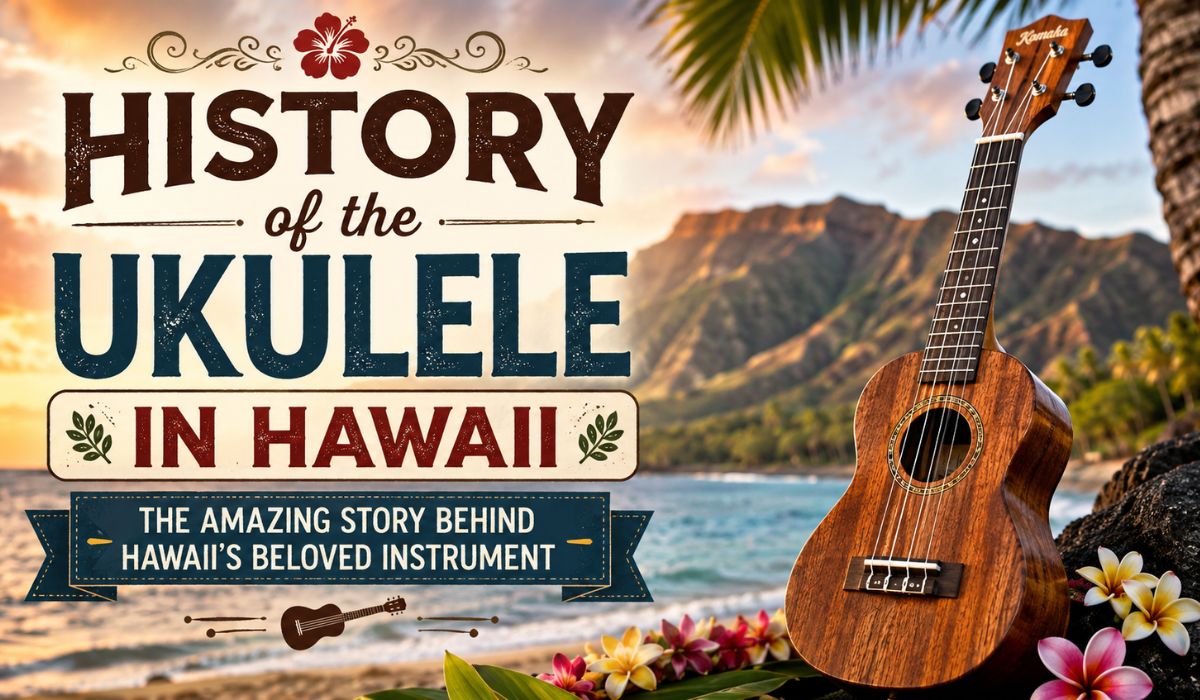
The History Of The Ukulele In Hawaii is one of the most fascinating stories in music. Today, the ukulele is instantly linked with Hawaii. Its bright sound, small size, and cheerful spirit make it one of the world’s most loved instruments. But surprisingly, the ukulele did not begin in Hawaii. Its story is one of migration, cultural blending, royal support, artistic innovation, and global success.
From Portuguese immigrants arriving on Hawaiian shores in the late 1800s to modern performers filling concert halls and social media feeds, the ukulele has traveled a remarkable path. Along the way, it became much more than a musical instrument. It became a symbol of Hawaiian culture, joy, and identity.
This article explores the complete History Of The Ukulele In Hawaii, from its earliest roots to its powerful role in Hawaiian life today.
Quick Bio Information
Origin Year: 1880s in Hawaii
Original Roots: Madeira, Portugal
Ancestor Instrument: Braguinha
Arrival Ship: Ravenscrag
Arrival Year: 1879
Birthplace In Hawaii: Honolulu
Meaning Of Ukulele: Jumping Flea
Royal Supporter: King David Kalākaua
Traditional Wood: Koa
Standard Tuning: G-C-E-A
Most Common Size: Soprano
Original Strings: Animal Gut
Modern Strings: Nylon
Major U.S. Breakthrough: 1915 Exposition
Modern Icon: Israel Kamakawiwoʻole
Modern Virtuoso: Jake Shimabukuro
Famous Hawaiian Brand: Kamaka
Global Popularity Boom: 2000s
Main Symbolism: Hawaiian Identity
Status Today: Worldwide Favorite
Why The Ukulele Is So Closely Tied To Hawaii
Few instruments are as strongly connected to one place as the ukulele is to Hawaii. Even people who know little about music often picture beaches, palm trees, and Hawaiian songs when they hear its gentle sound.
That connection happened because Hawaii embraced the ukulele in a way no other place did. The islands transformed it, gave it a new identity, and made it part of everyday life. Over time, the instrument became woven into Hawaiian celebrations, storytelling, dance, and education.
Today, the ukulele is not just played in Hawaii—it represents Hawaii itself.
What Is A Ukulele?
The ukulele is a small, four-string instrument from the lute family. It looks like a tiny guitar, but its sound is brighter and lighter.
Most ukuleles use G-C-E-A tuning, which creates the cheerful tone people recognize immediately.
There are four common sizes:
Soprano, the smallest and most traditional.
Concert, slightly larger with a fuller tone.
Tenor, favored by many professional players.
Baritone, the largest, with a deeper sound.
Its simple design is one reason it became so popular. It is affordable, portable, and beginner-friendly.
Before Hawaii: The Portuguese Roots
The story begins far from the Pacific Ocean—in Madeira, Portugal.
In the 1800s, Portuguese musicians played small string instruments such as the Braguinha, Machete, and Rajão. These instruments were compact and lively, perfect for folk music.
The ukulele’s closest ancestor is usually considered the Braguinha, a tiny guitar-like instrument with four strings.
When Portuguese workers later moved to Hawaii, they brought these beloved instruments with them—and unknowingly brought the beginnings of the ukulele.
How The Ukulele Arrived In Hawaii
In 1879, thousands of Portuguese immigrants traveled from Madeira to Hawaii to work on sugar plantations.
One ship, the Ravenscrag, became famous in ukulele history because it carried many Madeiran families—and their instruments.
Among the passengers was João Fernandes, whose energetic playing reportedly amazed Hawaiians when he arrived in Honolulu.
That moment may have been the first public introduction of the instrument that would soon become Hawaii’s musical symbol.
The Meaning Behind The Name “Ukulele”
The word Ukulele is often translated as “Jumping Flea.”
Most historians believe this referred to the quick movement of a musician’s fingers across the strings.
There are also alternative theories. Some Hawaiian scholars suggest the name may have had symbolic meanings tied to performance and movement.
Whatever its exact origin, the name stuck—and soon became recognized worldwide.
The Craftsmen Who Built The First Hawaiian Ukuleles
The early instrument needed builders, and Hawaii had three legendary ones:
Manuel Nunes, Augusto Dias, and José Do Espírito Santo.
These Portuguese craftsmen adapted the original Braguinha into something new. They changed its size, shape, and tuning to suit Hawaiian music.
This was the true birth of the Hawaiian ukulele.
Their handmade instruments laid the foundation for all modern ukuleles.
How Hawaiian Royalty Helped The Ukulele Grow
King David Kalākaua, known as the Merrie Monarch, loved Hawaiian arts.
He believed music and dance were central to Hawaiian identity. During his reign, he promoted traditional culture and welcomed the ukulele into royal events.
Because of royal support, the ukulele gained prestige quickly.
It was no longer simply an immigrant instrument. It became Hawaiian.
The Ukulele In Traditional Hawaiian Culture
The ukulele soon became essential to Hawaiian life.
It accompanied Hula, supported vocal performances, and played at gatherings and celebrations.
Families passed songs from generation to generation.
Children learned it early.
Its sound became part of weddings, festivals, and community events.
In Hawaii, the ukulele was never just entertainment—it was a way to preserve culture.
The 1915 Breakthrough In America
The ukulele’s biggest early breakthrough came at the Panama-Pacific International Exposition in San Francisco.
The Hawaiian Pavilion introduced millions of visitors to Hawaiian music and dance.
Visitors loved what they heard.
Suddenly, Americans wanted ukuleles.
This event launched the first major ukulele boom.
The Jazz Age And National Popularity
During the 1920s, the ukulele exploded in popularity.
It was cheap, easy to learn, and ideal for home entertainment.
Companies like Martin, Harmony, and Regal began mass-producing them.
Sheet music included ukulele chords.
Families gathered around living rooms to sing and play.
The ukulele became a national favorite.
Postwar Success And Television Fame
After World War II, the instrument remained strong.
Plastic versions made ukuleles cheaper than ever.
Millions were sold.
Television helped too.
Broadcaster Arthur Godfrey taught audiences how to play.
Hollywood stars also embraced the instrument, making it fashionable again.
The Decline In The 1970s
Then came a difficult period.
Rock music dominated.
Electric guitars became the symbol of youth culture.
The ukulele was unfairly dismissed as a toy.
Sales dropped sharply.
For many years, it faded from mainstream attention.
But it never disappeared in Hawaii.
That quiet survival would matter later.
The Great Comeback
The 1990s brought new life.
Teachers, musicians, and publishers began reintroducing the instrument.
Then came a historic moment.
Hawaiian musician Israel Kamakawiwoʻole released his haunting medley of Somewhere Over The Rainbow and What A Wonderful World.
It touched millions.
Suddenly, the world listened again.
The ukulele was back.
The YouTube Revolution
The internet changed everything.
In 2006, Jake Shimabukuro went viral with While My Guitar Gently Weeps.
Millions watched.
Thousands bought ukuleles.
Free tutorials spread across YouTube.
Learning became easier than ever.
This digital revolution created the biggest global ukulele boom in history.
Why The Ukulele Still Matters In Hawaii Today
Today, the ukulele remains central to Hawaiian life.
Schools teach it.
Families share it.
Festivals celebrate it.
Tourists buy it.
Professional musicians continue to innovate with it.
More importantly, Hawaiians still see it as part of their cultural identity.
That living connection keeps the instrument meaningful.
New Perspectives On The Ukulele’s Future
Looking toward 2026 and beyond, the ukulele continues evolving.
Sustainable woods are becoming more important.
Digital learning has expanded access worldwide.
Young musicians are blending the ukulele into jazz, rock, classical, and pop.
What began as an immigrant instrument has become a global voice.
Its future looks brighter than ever.
Final Thoughts
The History Of The Ukulele In Hawaii is more than the story of an instrument.
It is the story of cultural exchange.
It is the story of adaptation.
It is the story of Hawaii itself.
Born from Portuguese roots but transformed by Hawaiian hands and hearts, the ukulele became a powerful symbol of joy, resilience, and identity.
Its sound carries history.
Its strings connect generations.
And its story is still being written.
FAQs About History Of The Ukulele In Hawaii
Where Did The Ukulele Originally Come From?
The ukulele’s earliest roots trace back to Madeira, Portugal, where small instruments like the Braguinha were popular. It was later adapted in Hawaii into the instrument we know today.
When Did The Ukulele Arrive In Hawaii?
Most historians point to 1879, when Portuguese immigrants arrived in Hawaii aboard the Ravenscrag carrying their instruments.
Why Is The Ukulele Associated With Hawaii?
Hawaii embraced and transformed the instrument. It became deeply connected to Hawaiian music, dance, and culture, making it a lasting symbol of the islands.
What Does “Ukulele” Mean?
The most accepted meaning is “Jumping Flea,” likely referring to the fast movement of a player’s fingers.
Who Helped Make The Ukulele Famous In Hawaii?
King David Kalākaua played a major role by supporting Hawaiian music and culture, helping the ukulele gain popularity.
Why Did The Ukulele Become Popular Worldwide?
Its affordable price, easy learning curve, internet tutorials, and famous artists helped it spread globally.
Is The Ukulele Still Important In Hawaii Today?
Yes. It remains an essential part of Hawaiian education, family traditions, festivals, and cultural identity.
What Makes The Hawaiian Ukulele Unique?
Traditional Hawaiian ukuleles often use Koa wood, feature unique craftsmanship, and reflect generations of island musical tradition.
Recommended For You: Hawaiian Ukulele History: The Fascinating Story Behind Hawaii’s Beloved Instrument