
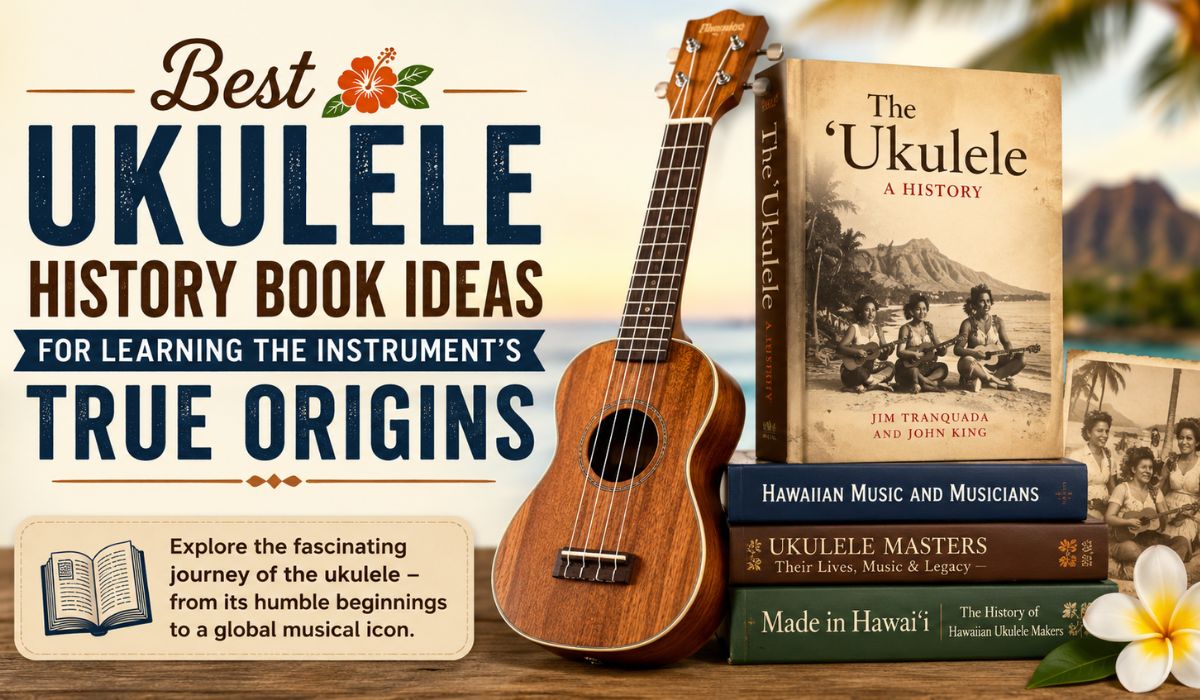
The ukulele may look like a small and simple instrument, but its story is surprisingly rich, emotional, and deeply connected to culture and history. Over the years, millions of people around the world have fallen in love with its warm sound, beginner-friendly design, and cheerful personality. Yet many players never discover the fascinating journey behind this iconic Hawaiian instrument. That is where a great Ukulele History Book becomes so valuable.
Reading about the history of the ukulele can completely change how people view the instrument. It is not just a beach souvenir or a beginner guitar alternative. The ukulele represents migration, creativity, Hawaiian identity, musical innovation, and even social change. From Portuguese immigrants arriving in Hawai‘i during the late nineteenth century to modern online ukulele communities in 2026, the instrument has traveled an incredible path across generations and cultures.
Today, more readers are searching for the best ukulele history books because they want reliable and engaging information. Musicians, collectors, teachers, students, and casual readers are all interested in understanding how the ukulele became one of the world’s most beloved instruments. Some books focus on Hawaiian music traditions, while others explore famous performers, instrument makers, and the worldwide ukulele revival.
This guide explores the best ideas and themes found in a great Ukulele History Book. Along the way, you will discover the instrument’s true origins, the role of Hawaiian culture, the influence of technology, and the books that offer the most useful insights for modern readers.
Quick Bio Information About Ukulele History
| Topic | Information |
|---|---|
| Instrument Origin | Inspired By Portuguese Folk Instruments |
| Arrival In Hawai‘i | 1879 |
| Early Influences | Machete, Braguinha, Rajão |
| Main Cultural Home | Hawai‘i |
| Common Tuning | G–C–E–A |
| Famous Hawaiian King | David Kalākaua |
| Famous History Book | The ‘Ukulele: A History |
| Major American Breakthrough | Panama-Pacific Exposition 1915 |
| Popular Era | 1920s Jazz Age |
| Important Revival Period | 1970s Hawaiian Renaissance |
| Famous Modern Musician | Israel Kamakawiwoʻole |
| Common Wood | Koa |
| Early Strings | Gut Strings |
| Modern Strings | Nylon |
| Famous Ukulele Brand | Kamaka |
| Global Growth | Expanded Rapidly Through Internet Culture |
| Learning Popularity | Beginner-Friendly Instrument |
| Modern Use | Schools, Social Media, Live Music |
| Symbolic Meaning | Hawaiian Culture And Aloha Spirit |
| Reader Interest In 2026 | Growing Worldwide |
Why Learning Ukulele History Changes The Way You See The Instrument
Many people first pick up a ukulele because it feels fun and easy to learn. However, once readers begin exploring ukulele history, they often realize the instrument carries a much deeper meaning. Understanding the story behind the ukulele creates a stronger emotional connection between the player and the music.
A good Ukulele History Book explains how the instrument became part of Hawaiian life and how it later spread across the world. Learning this background helps readers appreciate the traditions, musicians, and communities that shaped the instrument over time. It also reveals how music can connect cultures in unexpected ways.
For musicians, historical knowledge often improves creativity. Knowing how early Hawaiian players performed or how vintage ukuleles were built can inspire new musical ideas. Collectors also enjoy learning about rare instruments, famous manufacturers, and historic performances that changed the ukulele forever.
In recent years, the popularity of music history books has grown rapidly. Readers today want more than quick online facts. They want detailed stories, cultural insight, and trustworthy information. That is why modern ukulele history books continue attracting attention in 2026.
The True Origins Of The Ukulele
One of the most important lessons in any Ukulele History Book is the instrument’s real origin story. Although many people think the ukulele was fully invented in Hawai‘i, the truth is more complex and far more interesting.
The instrument’s roots can be traced to Portugal, especially the Madeira Islands. In 1879, Portuguese immigrants arrived in Hawai‘i carrying small string instruments known as the machete, braguinha, and rajão. These instruments strongly influenced the early development of the ukulele.
Hawaiian musicians quickly embraced the sound and adapted the instrument into something unique. Over time, local players changed the construction, tuning, and playing style. This cultural blending created the modern ukulele known today.
The word “ukulele” is commonly translated as “jumping flea,” possibly referring to the quick finger movements of early players. While historians still debate some details, most agree that Hawaiian culture transformed the instrument into its own musical identity.
Understanding this cultural fusion is essential because it shows the ukulele is both Portuguese and Hawaiian at the same time. This combination of influences is one reason the instrument’s history remains so fascinating.
What Makes A Great Ukulele History Book
Not every history book offers the same reading experience. Some focus heavily on technical information, while others tell the story in a warm and engaging way. The best Ukulele History Book balances historical accuracy with enjoyable storytelling.
Strong research is one of the most important qualities. Reliable books use old newspapers, interviews, photographs, archives, and music records to explain events clearly. Readers benefit when authors include verified historical information instead of repeating myths.
Visual content also improves the reading experience. Vintage photographs, rare instrument images, concert posters, and historical advertisements help bring the story to life. Many readers enjoy seeing how early ukuleles looked compared to modern versions.
Easy language matters too. A history book should feel welcoming even to beginners. The best authors explain cultural and musical topics without making readers feel overwhelmed.
Readers also appreciate books that connect the ukulele to broader subjects like Hawaiian history, tourism, entertainment, and social change. These connections make the instrument’s story feel larger and more meaningful.
Why “The ‘Ukulele: A History” Stands Out
One of the most respected books in this field is The ‘Ukulele: A History by Jim Tranquada and John King. This book is widely considered one of the most complete and carefully researched resources on the subject.
The authors explore how an obscure folk instrument from Portugal became a symbol of Hawai‘i and later an international musical phenomenon. The book explains how the ukulele experienced periods of popularity, decline, and revival throughout different decades.
What makes this book especially valuable is its wide cultural perspective. It does not only discuss instruments and musicians. It also explores politics, tourism, radio, television, and changing public attitudes toward Hawaiian music.
The book includes many important figures from ukulele history, including Hawaiian royalty, musicians, songwriters, and entertainers. Readers also learn how modern technology repeatedly helped revive interest in the instrument.
For anyone serious about learning ukulele history, this book remains one of the strongest recommendations available today.
How Hawaiian Culture Shaped The Ukulele
Hawaiian culture played the biggest role in transforming the ukulele into a global symbol. Without Hawai‘i, the instrument would likely have remained a small regional folk guitar with limited international recognition.
King David Kalākaua strongly supported music, dance, and Hawaiian cultural traditions during the late nineteenth century. His encouragement helped local musicians experiment with the ukulele and include it in performances and celebrations.
The instrument quickly became connected with hula dancing, Hawaiian songs, and family gatherings. Local players developed unique techniques that gave the ukulele its distinctive rhythm and warmth.
As tourism increased during the early twentieth century, visitors associated the ukulele with paradise, beaches, and island life. Hotels, stage shows, and Hawaiian performances helped spread this image internationally.
Even today, the ukulele remains closely linked to Hawaiian identity. Many modern players continue honoring traditional Hawaiian music while also creating new styles and sounds for global audiences.
The Ukulele Boom In America
The ukulele’s rise in the mainland United States became one of the biggest musical trends of the early twentieth century. A major turning point occurred during the Panama-Pacific International Exposition in San Francisco in 1915.
Hawaiian performers amazed audiences with their music and introduced many Americans to the ukulele for the first time. After the event, demand for ukuleles exploded across the country.
During the 1920s and 1930s, the instrument became fashionable in homes, schools, and entertainment venues. Because ukuleles were relatively affordable and easy to learn, many families purchased them during this period.
Music publishers printed thousands of ukulele songbooks, and radio broadcasts helped popularize Hawaiian-inspired music nationwide. Vaudeville performers and entertainers further increased the instrument’s visibility.
This era proved the ukulele could become much more than a regional instrument. It had become part of mainstream American popular culture.
Famous People Connected To Ukulele History
Many famous personalities helped shape the instrument’s reputation over the years. A quality Ukulele History Book often explores these important figures in detail.
Queen Liliʻuokalani, the last monarch of Hawai‘i, composed beautiful songs that remain important in Hawaiian music history. Her connection to music strengthened the cultural importance of the ukulele.
Arthur Godfrey helped spark another ukulele boom during the 1950s through television and radio programs. His friendly personality introduced the instrument to millions of viewers.
British entertainer George Formby became famous for his energetic ukulele performances and comedic songs. His influence remains strong among collectors and musicians today.
Modern artists also played major roles in the ukulele revival. Israel Kamakawiwoʻole introduced global audiences to Hawaiian music through his emotional performances and unforgettable medley of “Somewhere Over The Rainbow” and “What A Wonderful World.”
Even celebrities like Paul McCartney and modern social media creators have helped keep the ukulele relevant for younger audiences.
How Technology Revived The Ukulele Again And Again
One fascinating theme found in many ukulele history books is the role of technology. Every major wave of ukulele popularity has been connected to new forms of media.
Early phonograph recordings introduced Hawaiian music to listeners far from the islands. Radio then allowed audiences to hear ukulele performances regularly in their homes.
Television helped create another revival during the 1950s and 1960s. Family entertainment programs often featured ukulele performances, making the instrument feel approachable and fun.
The internet completely changed ukulele culture again during the 2000s and 2010s. Online tutorials allowed beginners everywhere to learn songs quickly. Social media platforms and video-sharing websites created worldwide ukulele communities.
In 2026, digital learning continues helping the ukulele grow. Virtual lessons, live-stream concerts, and online collaborations have introduced the instrument to new generations around the globe.
Rare Facts Hidden Inside Ukulele History Books
Many readers enjoy discovering unusual details hidden inside older ukulele history books. These facts often make the instrument’s story even more interesting.
Early ukuleles used gut strings instead of modern nylon strings. These materials created a softer tone but required more maintenance. Instrument makers later switched to nylon because it was more durable and affordable.
Some early American manufacturers produced extremely cheap souvenir ukuleles for tourists. While these instruments increased popularity, they also caused some musicians to treat the ukulele as a novelty rather than a serious instrument.
Vintage Hawaiian instrument makers such as Kamaka became famous for their craftsmanship and innovative designs. Today, collectors highly value original Hawaiian-made ukuleles from the early twentieth century.
Another surprising fact is that the ukulele became popular in countries far beyond Hawai‘i and America. Communities in Japan, Canada, Europe, and Southeast Asia developed strong ukulele traditions of their own.
Choosing The Right Ukulele History Book
Different readers look for different experiences when choosing a Ukulele History Book. Beginners often prefer books with simple explanations and strong visual content. Academic readers may want deeper research and historical analysis.
Collectors usually enjoy books focused on vintage instruments, manufacturing history, and rare photographs. Musicians often prefer books that connect historical events with musical development and playing styles.
Some readers mainly want cultural stories about Hawai‘i and traditional music. Others are more interested in famous performers and entertainment history.
Before choosing a book, it helps to think about personal interests. A reader fascinated by Hawaiian culture may enjoy a very different book from someone interested in instrument construction or modern ukulele trends.
The good news is that today’s market offers more high-quality ukulele books than ever before. This growing selection reflects the instrument’s increasing popularity worldwide.
Why Ukulele History Still Matters Today
The story of the ukulele continues inspiring people because it represents much more than music alone. Its history reflects migration, creativity, cultural exchange, and community connection.
Modern readers can learn valuable lessons from the instrument’s journey. The ukulele shows how cultures can blend together to create something entirely new and meaningful. It also demonstrates how music helps preserve traditions while adapting to changing times.
The instrument’s continuing popularity in schools and online communities proves that simple music can still bring people together in a fast-moving digital world. Many teachers use the ukulele because it encourages confidence, creativity, and participation.
As interest in Hawaiian culture and acoustic music continues growing in 2026, the ukulele remains one of the most welcoming instruments for beginners and experienced musicians alike.
Final Thoughts
Finding the right Ukulele History Book can open the door to a much deeper understanding of music, culture, and Hawaiian history. What begins as curiosity about a small four-string instrument often turns into a fascinating journey across continents, generations, and musical traditions.
The ukulele’s story is unique because it combines Portuguese roots, Hawaiian creativity, American entertainment culture, and modern global influence. Few instruments have experienced such dramatic changes while still keeping their friendly and joyful personality.
Whether readers want to learn about famous musicians, vintage instruments, Hawaiian traditions, or the global ukulele revival, today’s best history books provide incredible insight and inspiration. They remind us that even the smallest instrument can carry a very large story.
FAQs About Ukulele History Book
What Is The Best Ukulele History Book For Beginners?
Many readers recommend The ‘Ukulele: A History because it combines strong research with engaging storytelling. Beginners also enjoy books with visual timelines and easy explanations of Hawaiian culture.
Was The Ukulele Originally From Hawai‘i?
The ukulele was developed in Hawai‘i but inspired by Portuguese instruments brought by immigrants from Madeira in 1879. Hawaiian musicians transformed these instruments into the modern ukulele.
Why Is Hawaiian Culture Important To Ukulele History?
Hawaiian musicians, royalty, and performers helped shape the instrument’s identity and popularity. Hawaiian traditions gave the ukulele its cultural meaning and worldwide image.
Why Did The Ukulele Become Popular In America?
The instrument gained national attention after Hawaiian performances at the Panama-Pacific International Exposition in 1915. Radio, movies, and affordable instruments also helped increase popularity.
Are Vintage Ukulele History Books Valuable?
Some older ukulele books and rare editions are highly collectible, especially books with historical photographs, original research, or connections to famous musicians and instrument makers.
How Did The Internet Help The Ukulele Grow?
Online tutorials, social media, and video platforms introduced the ukulele to millions of new learners. Internet communities helped create another worldwide revival during the twenty-first century.
Why Do Schools Use Ukuleles Today?
Ukuleles are affordable, portable, and easier to learn than many other instruments. Teachers also use them to encourage creativity, teamwork, and musical confidence.
Is Ukulele History Still Relevant In 2026?
Yes. Interest in Hawaiian music, acoustic instruments, and cultural history continues growing. Modern readers want trustworthy information about the ukulele’s origins and global musical influence.
Recommended For You: Ukulele History 2025: The Complete Story Of Hawaii’s Beloved Instrument