
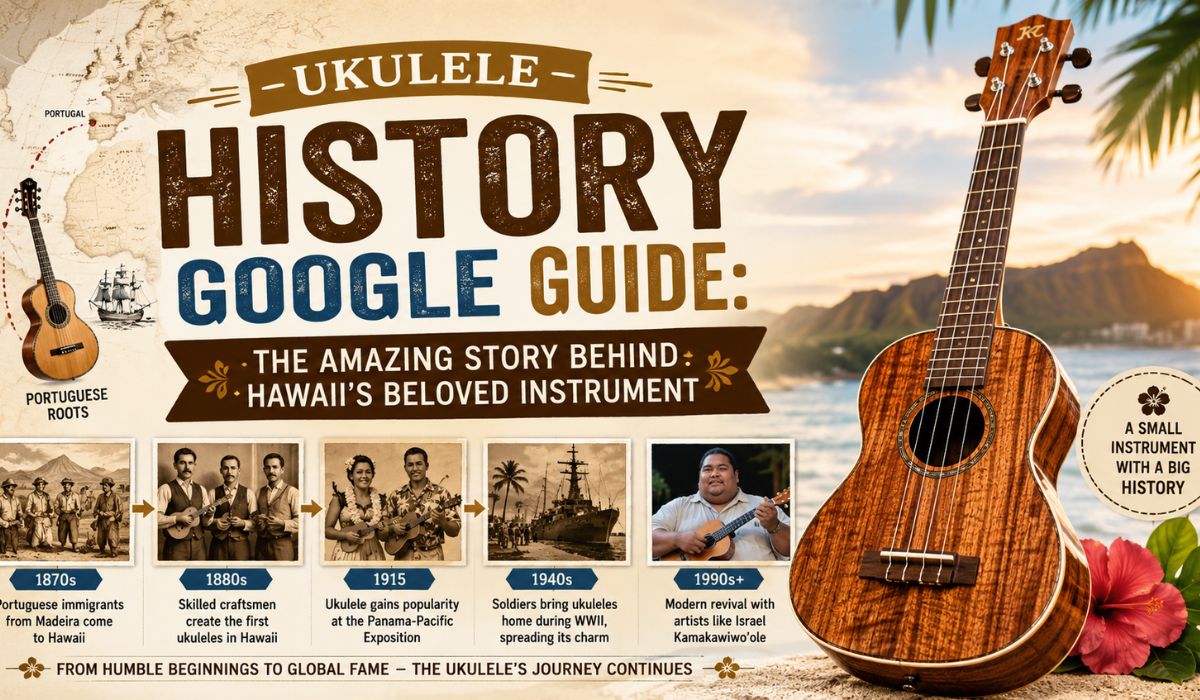
When People Search For “Ukulele History Google,” They Usually Want To Know One Thing: Where Did This Small And Cheerful Instrument Really Come From? Many People Associate The Ukulele With Hawaiian Beaches, Relaxing Music, And Sunny Island Culture. While Hawaii Helped Make The Instrument Famous, The Full Story Is Much Bigger And More Interesting Than Most People Realize.
The Ukulele Has A Rich History Connected To Portugal, Immigration, Hawaiian Royalty, Global Music Trends, And Even The Rise Of The Internet. Over More Than A Century, This Small Four-String Instrument Traveled Across Oceans And Cultures Before Becoming One Of The Most Loved Musical Instruments In The World.
Today, The Ukulele Is Used In Pop Music, Folk Music, Jazz, Traditional Hawaiian Music, And Social Media Performances Watched By Millions. It Is Affordable, Easy To Learn, And Filled With Personality. Yet Behind Its Friendly Sound Is A Fascinating Story Of Cultural Exchange And Musical Innovation.
This Ukulele History Google Guide Explores The Complete Journey Of Hawaii’s Beloved Instrument, From Its Ancient Musical Ancestors To Its Modern Worldwide Popularity In 2026.
Quick Bio Information About Ukulele History
| Topic | Information |
|---|---|
| Instrument Name | Ukulele |
| Main Origin | Hawaii |
| Cultural Roots | Portuguese And Hawaiian |
| Ancestor Instrument | Machete De Braga |
| Other Influences | Cavaquinho And Rajão |
| Main Tuning | G–C–E–A |
| Early Development | 1880s |
| Key Immigration Period | Late 19th Century |
| Main Immigration Source | Madeira, Portugal |
| Famous Builders | Manuel Nunes, Augusto Dias, Jose Do Espirito Santo |
| Traditional Hawaiian Wood | Koa |
| Meaning Of Ukulele | Usually “Jumping Flea” |
| Famous Hawaiian Supporter | King David Kalākaua |
| First Major US Exposure | 1915 Panama-Pacific Exposition |
| Global Revival Period | 1990s And 2000s |
| Famous Modern Player | Israel Kamakawiwoʻole |
| Viral Modern Performer | Jake Shimabukuro |
| Main Ukulele Sizes | Soprano, Concert, Tenor, Baritone |
| Modern Popularity | Worldwide |
| Beginner Friendly | Yes |
What Makes The Ukulele Special
The Ukulele Is A Small String Instrument That Usually Has Four Strings And A Bright, Happy Tone. Although It Looks Similar To A Small Guitar, The Ukulele Has Its Own Sound, Playing Style, And Musical Identity. The Standard Tuning, G–C–E–A, Gives The Instrument Its Distinctive Voice And Warm Character.
Modern Ukuleles Come In Four Main Sizes: Soprano, Concert, Tenor, And Baritone. The Soprano Is The Traditional Hawaiian Size And Produces The Classic Bright Sound Most People Recognize. Concert And Tenor Models Offer More Volume And Comfort, While Baritone Ukuleles Produce A Deeper Tone Closer To A Guitar.
One Reason The Ukulele Became So Popular Is Accessibility. Beginners Can Learn Basic Chords Quickly, And The Instrument Is Lightweight, Portable, And Affordable. At The Same Time, Skilled Musicians Can Use It To Perform Complex Fingerstyle Music, Jazz, Classical Pieces, And Advanced Solos.
The Ancient Roots Behind The Ukulele
The Story Of The Ukulele Starts Long Before Hawaii. Historians Believe Its Musical Family Can Be Traced Back To Ancient Lute Instruments Used In Europe, North Africa, And The Middle East Hundreds Of Years Ago. The Lute Was One Of The Most Influential String Instruments In History And Inspired Many Smaller Regional Instruments Across Europe.
As Musical Traditions Spread Through Countries Like Spain And Portugal, New Variations Appeared. These Instruments Became Smaller, Easier To Carry, And Better Suited For Folk Music. Over Time, Portuguese Builders Developed Instruments That Closely Resembled The Modern Ukulele.
The Most Important Ancestors Were The Machete De Braga, Cavaquinho, And Rajão. These Small Portuguese Instruments Shared Similar Shapes, Short Necks, And Four Or Five Strings. Their Design And Tuning Directly Influenced What Would Eventually Become The Hawaiian Ukulele.
The Portuguese Instruments That Inspired The Ukulele
The Machete De Braga Came From Northern Portugal And Was Extremely Important In Ukulele History. It Was Small, Lightweight, And Often Built With Steel Strings. The Cavaquinho Was Similar But Became Especially Popular In Portuguese And Brazilian Music Traditions.
The Rajão Played An Even Bigger Role In Shaping Modern Ukulele Tuning. It Used Five Strings Tuned D–G–C–E–A. Historians Believe Early Hawaiian Builders Removed The Lowest String, Creating The Familiar Ukulele Tuning Used Today.
This Unique Reentrant Tuning Is One Of The Reasons The Ukulele Sounds So Different From A Guitar. Instead Of Starting With The Lowest Note First, The High G String Gives The Instrument Its Bright And Playful Character.
These Portuguese Instruments Were Not Just Musical Tools. They Represented Family Traditions, Folk Culture, And Community Gatherings. When Portuguese Immigrants Traveled Across The Ocean, They Brought These Traditions With Them.
How Portuguese Immigrants Brought Music To Hawaii
In The Late 1800s, Madeira Experienced Serious Economic Problems. The Wine Industry Declined, Jobs Became Scarce, And Many Families Faced Poverty. At The Same Time, Hawaii’s Sugar Plantation Industry Was Expanding Rapidly And Needed Workers.
Hawaiian Plantation Owners Recruited Laborers From Many Countries, Including Portugal. Thousands Of Madeiran Families Accepted Contracts And Traveled To Hawaii Looking For Better Opportunities. Historians Estimate That Around 25,000 Portuguese Immigrants Arrived During This Period.
These Immigrants Did Not Arrive Empty-Handed. They Brought Their Food, Language, Religion, Festivals, And Musical Instruments. Their Small String Instruments Quickly Became Popular In Hawaiian Communities Because They Were Portable And Perfect For Gatherings And Celebrations.
This Cultural Exchange Changed Hawaiian Music Forever. The Portuguese Instruments Blended With Local Traditions And Slowly Evolved Into Something New.
The Birth Of The Hawaiian Ukulele
The Modern Ukulele Was Likely Created In Honolulu During The 1880s. Skilled Portuguese Woodworkers Began Adapting Their Traditional Instruments Using Hawaiian Materials And Local Ideas. Over Time, The Instrument Developed Its Own Shape, Tone, And Identity.
Unlike The Portuguese Originals, Early Hawaiian Ukuleles Were Often Smaller And Tuned Higher. Hawaiian Builders Experimented With Design Changes That Improved Comfort And Sound Projection.
One Major Difference Was The Use Of Hawaiian Koa Wood. Koa Was Native To Hawaii And Already Popular In Furniture Making. Instrument Builders Discovered That Koa Produced A Warm, Bright Sound While Also Looking Beautiful.
The Instrument Quickly Became Connected To Hawaiian Culture And Music. Local Musicians Embraced It, And Hawaiian Royalty Helped Introduce It To Wider Audiences.
The Three Men Who Helped Shape Ukulele History
Three Portuguese Craftsmen Are Widely Associated With The Early Development Of The Ukulele: Manuel Nunes, Augusto Dias, And Jose Do Espirito Santo.
Manuel Nunes Was Known For Building Some Of The Earliest Hawaiian Ukuleles. Augusto Dias Became Famous For High-Quality Craftsmanship And Instrument Design. Jose Do Espirito Santo Also Built Instruments And Helped Spread Their Popularity Across Hawaii.
These Men Originally Worked In Hawaii’s Sugar Industry Before Returning To Their Woodworking Skills. Eventually, They Opened Shops In Honolulu And Began Building String Instruments Full-Time.
Although Historians Still Debate Who Built The First True Ukulele, These Three Builders Played A Central Role In Turning A Portuguese Folk Instrument Into A Hawaiian Musical Symbol.
The Role Of Hawaiian Royalty And Culture
The Ukulele Became Even More Important After Receiving Support From Hawaiian Royalty. King David Kalākaua Loved Music, Hula, And Hawaiian Cultural Traditions. During His Reign, Public Performances Featuring The Ukulele Became More Common.
King Kalākaua Encouraged The Preservation Of Hawaiian Arts During A Time Of Growing Foreign Influence. As A Result, The Ukulele Became Closely Connected To Hawaiian Identity.
The Instrument Was Used During Gatherings, Hula Performances, Celebrations, And Royal Events. Its Bright Tone Fit Perfectly With Traditional Hawaiian Singing And Dance.
This Royal Support Helped The Ukulele Gain Respect And Visibility Beyond Local Communities.
What The Word “Ukulele” Really Means
The Meaning Of The Word “Ukulele” Has Been Debated For Many Years. The Most Popular Translation Is “Jumping Flea.” According To Tradition, The Name Referred To The Fast Finger Movements Of Musicians While Playing.
Another Interpretation Came From Hawaiian Queen Liliʻuokalani, Who Suggested The Name Could Mean “The Gift That Came Here.” Many People Appreciate This More Poetic Explanation Because It Reflects The Cultural Exchange Behind The Instrument’s Creation.
Even Today, Historians Continue Discussing The Exact Origin Of The Name. This Mystery Adds To The Charm And Personality Of The Ukulele.
How The Ukulele Became Famous In America
For Many Years, The Ukulele Remained Mostly Associated With Hawaii. That Changed Dramatically In 1915 During The Panama-Pacific International Exposition In San Francisco.
Hawaiian Musicians Performed Traditional Music For Large Crowds, And Mainland Americans Fell In Love With The Sound Of The Ukulele. Interest Grew Rapidly Across The United States During The 1920s.
Music Publishers Began Producing Ukulele Songbooks, And Manufacturers Started Building Affordable Instruments For Beginners. Soon, The Ukulele Appeared In Jazz Bands, Vaudeville Performances, And Popular Music.
This Period Became Known As The First Great Ukulele Boom.
The Rise And Fall Of Popularity
Like Many Music Trends, The Ukulele Experienced Several Waves Of Popularity. During The 1930s And 1940s, The Instrument Remained Popular But Faced Competition From Guitars And Big Band Music.
World War II Unexpectedly Helped Spread The Instrument Again. American Soldiers Stationed In Hawaii Returned Home With Ukuleles And Hawaiian Music Influences.
However, Interest Declined Again During The 1950s And 1960s. Cheap Plastic Instruments Also Hurt The Ukulele’s Reputation Because Many People Viewed Them As Toys Rather Than Serious Musical Instruments.
Despite This Decline, Dedicated Musicians Continued Preserving The Instrument’s Tradition.
The Modern Ukulele Revival
The Modern Revival Began During The 1990s. One Of The Biggest Turning Points Came When Hawaiian Musician Israel Kamakawiwoʻole Released His Famous Version Of “Somewhere Over The Rainbow/What A Wonderful World.”
The Emotional Performance Introduced Millions Of New Listeners To The Sound Of The Ukulele. The Song Appeared In Movies, Television Shows, Advertisements, And Online Videos Around The World.
Soon After, The Internet Helped Create Another Explosion Of Interest. YouTube Performers Like Jake Shimabukuro Demonstrated Incredible Technical Skill On The Instrument. Viral Videos Changed Public Opinion And Showed That The Ukulele Could Be Serious, Emotional, And Musically Complex.
By The Early 2000s, The Ukulele Had Fully Returned To Global Popularity.
Why The Ukulele Remains Popular In 2026
In 2026, The Ukulele Continues Growing In Popularity Across Many Countries. One Major Reason Is Simplicity. Beginners Can Learn Basic Songs Quickly Without Feeling Overwhelmed.
The Instrument Is Also Affordable Compared To Many Others. Students, Travelers, Families, And Casual Musicians Appreciate Its Convenience And Friendly Sound.
Social Media Platforms Continue Helping Ukulele Communities Grow. Short Videos, Tutorials, Online Lessons, And Live Performances Introduce New Players To The Instrument Every Day.
Modern Builders Now Offer High-Quality Ukuleles Using Advanced Technology, Better Construction Methods, And Sustainable Tonewoods. Electric Ukuleles, Acoustic-Electric Models, And Multi-String Variations Continue Expanding The Instrument’s Creative Possibilities.
Common Myths About Ukulele History
One Common Myth Is That The Ukulele Was Entirely Invented In Hawaii Without Outside Influence. In Reality, The Instrument Was Deeply Influenced By Portuguese Musical Traditions.
Another Misunderstanding Is That Ukuleles Are Only For Beginners. While The Instrument Is Easy To Start Learning, Professional Musicians Use It For Jazz, Classical Music, Fingerstyle Arrangements, And Concert Performances.
Some People Also Believe All Ukuleles Sound The Same. In Truth, Tone Changes Greatly Depending On Size, Wood Type, String Material, And Construction Quality.
Understanding These Myths Helps Readers Appreciate The Instrument’s Rich Musical History And Versatility.
The Future Of The Ukulele
The Future Of The Ukulele Looks Bright. Builders Continue Experimenting With New Materials, Improved Electronics, And Creative Designs. Carbon Fiber Ukuleles, Travel Models, And Hybrid Instruments Are Becoming More Common.
At The Same Time, Traditional Hawaiian Builders Continue Preserving Classic Construction Techniques Using Koa Wood And Handmade Craftsmanship.
Musicians Are Also Bringing The Ukulele Into New Genres Including Indie Rock, Electronic Music, Jazz Fusion, And Film Soundtracks. Younger Artists Continue Discovering Fresh Ways To Use The Instrument.
The Ukulele’s Journey Is Far From Over. More Than A Century After Its Birth, It Still Inspires Creativity And Connection Around The World.
Conclusion
The Story Behind The Ukulele Is Much More Than The History Of A Small Instrument. It Is A Story About Immigration, Cultural Exchange, Creativity, And Human Connection. Portuguese Workers Brought Their Musical Traditions To Hawaii, Hawaiian Builders And Musicians Gave The Instrument Its Identity, And The World Eventually Fell In Love With Its Unique Sound.
Today, When People Search For “Ukulele History Google,” They Discover A Rich And Inspiring Journey That Connects Europe, Hawaii, America, And Modern Global Music Culture. From Humble Beginnings On Sugar Plantations To International Concert Stages And Viral Videos, The Ukulele Has Become One Of The Most Recognizable Instruments In The World.
Its Bright Tone Continues Bringing Joy To Beginners And Professionals Alike. And As Music Continues Evolving In 2026 And Beyond, The Ukulele Will Almost Certainly Continue Inspiring New Generations Of Players.
FAQs About Ukulele History Google
Where Did The Ukulele Originally Come From?
The Modern Ukulele Was Developed In Hawaii During The Late 1800s, But Its Main Influences Came From Portuguese Instruments Like The Machete De Braga, Cavaquinho, And Rajão.
Why Is The Ukulele Connected To Hawaii?
Portuguese Immigrants Brought Small String Instruments To Hawaii During The Sugar Plantation Boom. Hawaiian Musicians And Builders Adapted These Instruments Into The Modern Ukulele.
What Does The Word “Ukulele” Mean?
The Most Common Translation Is “Jumping Flea,” Referring To Fast Finger Movements While Playing. Another Interpretation Suggests It Means “The Gift That Came Here.”
Who Invented The Ukulele?
No Single Person Is Officially Credited As The Sole Inventor. However, Manuel Nunes, Augusto Dias, And Jose Do Espirito Santo Played Important Roles In Developing Early Hawaiian Ukuleles.
Why Did The Ukulele Become Popular Worldwide?
The Ukulele Became Popular Through Hawaiian Performances, American Music Trends, World War II, Television, Movies, And Modern Internet Platforms Like YouTube.
What Is The Difference Between A Ukulele And A Guitar?
Ukuleles Usually Have Four Strings And A Smaller Body, Producing A Brighter Sound. Guitars Typically Have Six Strings And A Wider Range Of Notes.
Is The Ukulele Easy To Learn?
Yes. Many Beginners Choose The Ukulele Because The Chords Are Simpler Than Guitar Chords, And Basic Songs Can Be Learned Quickly.
Why Is Koa Wood Important In Ukulele History?
Koa Wood Is Native To Hawaii And Became Famous For Its Beautiful Appearance And Warm Sound. Traditional Hawaiian Ukuleles Were Often Built Using Koa.
Recommended For You: Best Ukulele History Book Ideas For Learning The Instrument’s True Origins